

Social Media and Professionalism: What Every Nurse Should Know
Introduction
Social media has transformed the way healthcare professionals communicate, learn, and engage with the public. Platforms such as LinkedIn, Facebook, Instagram, X (formerly Twitter), TikTok, and professional online forums provide opportunities for education, networking, advocacy, and career development.
However, social media also presents professional and ethical challenges. Content shared online can have lasting consequences, particularly when it affects patient confidentiality, public confidence, or professional conduct. Even posts made outside working hours can raise concerns if they conflict with the standards expected of registered nurses.
The Nursing and Midwifery Council (NMC) expects nurses, midwives, and nursing associates to maintain professionalism in all aspects of their lives, including their online presence. Understanding how to use social media responsibly helps protect patients, employers, colleagues, and your professional registration.
Why Social Media Matters in Nursing
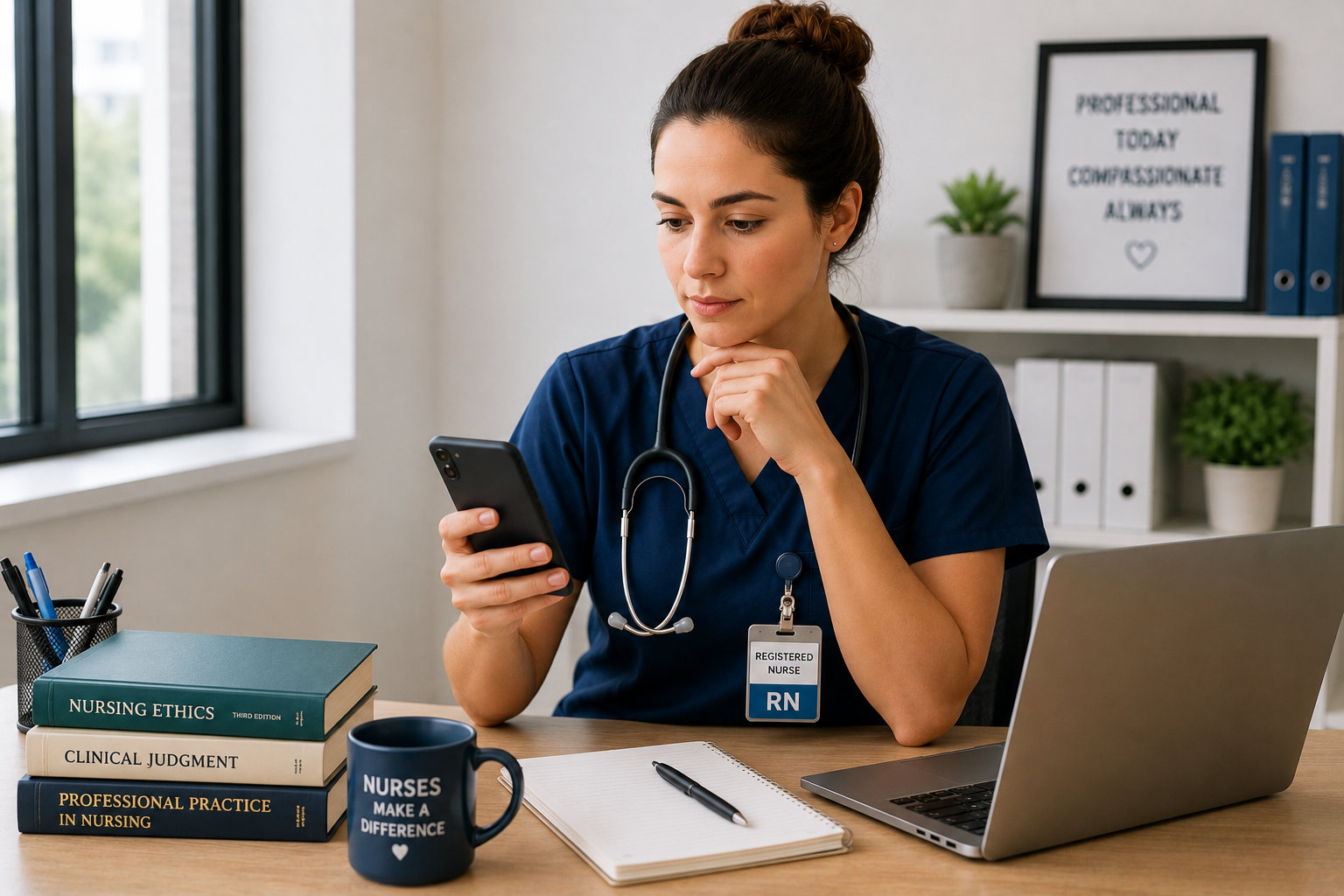
Social media has become an important communication tool within healthcare.
Many nurses use online platforms to:
Share professional knowledge
Access continuing professional development (CPD)
Promote public health campaigns
Network with colleagues
Support recruitment
Engage in professional discussions
Celebrate achievements
Raise awareness of healthcare issues
When used appropriately, social media can contribute positively to professional development and patient education.
Professional Standards Apply Online
Some healthcare professionals mistakenly believe that personal social media accounts are entirely private.
In reality, the same professional standards apply online as they do in clinical practice.
The NMC expects registrants to:
Act professionally at all times
Maintain public trust
Treat others with respect
Protect confidential information
Avoid discriminatory or offensive behaviour
Communicate responsibly
Professionalism does not end when a shift finishes.
Protecting Patient Confidentiality
Patient confidentiality remains one of the most important professional responsibilities.
Nurses should never share:
Patient names
Photographs
Medical conditions
Clinical records
Identifiable conversations
Hospital documentation
Personal details
Images from clinical areas without authorisation
Even when names are removed, small details may allow patients to be identified.
Always consider whether someone could recognise the individual from the information shared.
Maintaining Professional Boundaries
Social media can blur the boundaries between personal and professional relationships.
Healthcare professionals should think carefully before:
Accepting friend requests from patients
Discussing patient care online
Communicating privately with patients via social media
Sharing personal information with service users
Maintaining appropriate boundaries protects both patients and healthcare professionals.
Respecting Colleagues and Employers
Professionalism also extends to interactions with colleagues and employers.
Avoid posting content that:
Bullies or harasses colleagues
Damages working relationships
Shares confidential workplace information
Criticises patients publicly
Brings employers into disrepute
Encourages discrimination
Constructive discussions about healthcare are appropriate, but professionalism should always remain at the forefront.
Think Before You Post
A useful principle is to pause before publishing any content.
Ask yourself:
Would I be comfortable if my employer saw this?
Could this affect public confidence?
Does this respect patient confidentiality?
Is the information accurate?
Could the post be misunderstood?
Does it reflect professional values?
Once published, online content can be difficult—or impossible—to remove completely.
Professional Benefits of Social Media
When used responsibly, social media offers significant advantages.
It can help nurses:
Access educational resources
Follow clinical developments
Connect with healthcare leaders
Promote evidence-based practice
Support professional networking
Share research findings
Encourage public health awareness
Develop leadership opportunities
Many organisations now actively encourage responsible professional engagement online.
Common Social Media Mistakes
Examples of behaviour that may raise professional concerns include:
Posting confidential patient information
Sharing inappropriate photographs from clinical settings
Offensive or discriminatory comments
Online arguments with colleagues or patients
Misleading healthcare advice
Breaching employer policies
Using social media during clinical duties without permission
Many of these issues are entirely avoidable through careful consideration before posting.
Can Social Media Lead to NMC Investigations?
Yes.
In some cases, concerns regarding online behaviour may be referred to the NMC if they suggest that a registrant's fitness to practise could be impaired.
Potential concerns include:
Serious breaches of confidentiality
Harassment
Dishonesty
Discriminatory behaviour
Criminal online activity
Conduct likely to undermine public confidence
The NMC considers each case individually, taking account of the context, seriousness, and available evidence.
Employer Social Media Policies
Most healthcare organisations have policies governing the use of social media.
Nurses should familiarise themselves with:
Confidentiality policies
Information governance guidance
Social media policies
Data protection procedures
Professional conduct expectations
Following employer guidance helps reduce the risk of professional concerns.
The Role of Nursing Expert Witnesses
Where social media forms part of professional regulation proceedings, nursing expert witnesses may be instructed to assess whether the registrant's conduct was consistent with accepted professional standards.
Experts may consider:
The context of the online activity
Compliance with the NMC Code
Potential impact on patient confidence
Professional expectations
Whether accepted nursing standards were maintained
Their independent opinion assists regulatory panels in understanding the professional implications of the evidence presented.
Conclusion
Social media offers valuable opportunities for learning, networking, and professional engagement, but it also carries important responsibilities. Registered nurses are expected to uphold the same professional standards online as they do in every aspect of clinical practice.
By protecting confidentiality, maintaining professional boundaries, communicating respectfully, and considering the long-term impact of online activity, nurses can enjoy the benefits of social media while safeguarding their professional reputation and registration.
Responsible digital professionalism not only protects individual healthcare professionals but also strengthens public confidence in the nursing profession as a whole.
FAQs
What is an expert nurse witness?
An expert nurse witness is a qualified nursing professional who provides independent, impartial opinions in legal cases. Their role is to review clinical records, assess whether accepted standards of nursing care were met, and prepare expert reports for courts, solicitors, insurers, and tribunals.
What does a nursing expert witness do?
A nursing expert witness provides independent opinion on nursing care, standards, practice and professional issues relevant to legal proceedings.
Are you a referral agency or middleman?
No. We are not a referral agency or middleman. Instructions are handled directly by nursing experts within Expert Nurse Witness Group.
Are your experts registered with the Nursing and Midwifery Council?
Yes. All nursing experts within the group are registered with the Nursing and Midwifery Council and work within their professional scope of practice.
Can we request an expert CV?
Yes. We do not publish individual expert profiles as standard, but a relevant expert CV can be provided on request once the instruction has been reviewed and suitability has been confirmed.
Why do you not publish individual expert profiles?
We recognize that our nursing experts have a right to professional privacy and personal data protection. We therefore do not publish individual profiles as standard. This is in line with data protection principles, including only sharing relevant information where there is a clear professional purpose. A relevant CV can be provided on request once suitability has been confirmed.
Do your experts understand their duty to the court?
Yes. Our experts understand that their overriding duty is to the court and that this duty is independent of the party instructing them.
Can you provide mental capacity and best interests reports?
Yes. We can provide nursing expert opinion on mental capacity and best interests matters where the issues fall within nursing expertise.
What is a quantum care report?
A quantum care report evaluates a person's current and future care requirements following injury or illness. It helps quantify care needs for legal proceedings.
Can you provide quantum care reports?
Yes. We can provide quantum care reports, care cost opinions and future care needs reports where the issues fall within nursing expertise and are supported by the evidence.
Do you cover the whole of the UK?
Yes. We provide UK-wide nursing expert witness services, with remote consultations and assessments available where appropriate.
How long does it take to prepare an expert report?
Timeframes vary depending on the complexity of the case and the volume of records. We will provide an estimated turnaround time once instructions have been reviewed.
What happens after I submit an enquiry?
Once we receive your enquiry, we will review the information provided, discuss your requirements if needed, and advise on availability, scope of work, and the next steps.