

The Importance of Reflective Practice After a Patient Safety Incident
Introduction
Patient safety incidents can occur in any healthcare setting, even when skilled and experienced professionals are delivering care. While many incidents result from a combination of system pressures, communication challenges, and clinical complexity, they also provide valuable opportunities for learning and improvement.
Reflective practice is one of the most important professional tools available to nurses following a patient safety incident. Rather than focusing solely on what went wrong, reflection encourages healthcare professionals to examine the circumstances surrounding an event, understand contributing factors, identify lessons learned, and improve future practice.
The Nursing and Midwifery Council (NMC) recognises reflective practice as an important component of professional development and revalidation. Demonstrating genuine insight, learning, and a commitment to improvement can strengthen professional practice while contributing to safer care for patients.
What Is Reflective Practice?
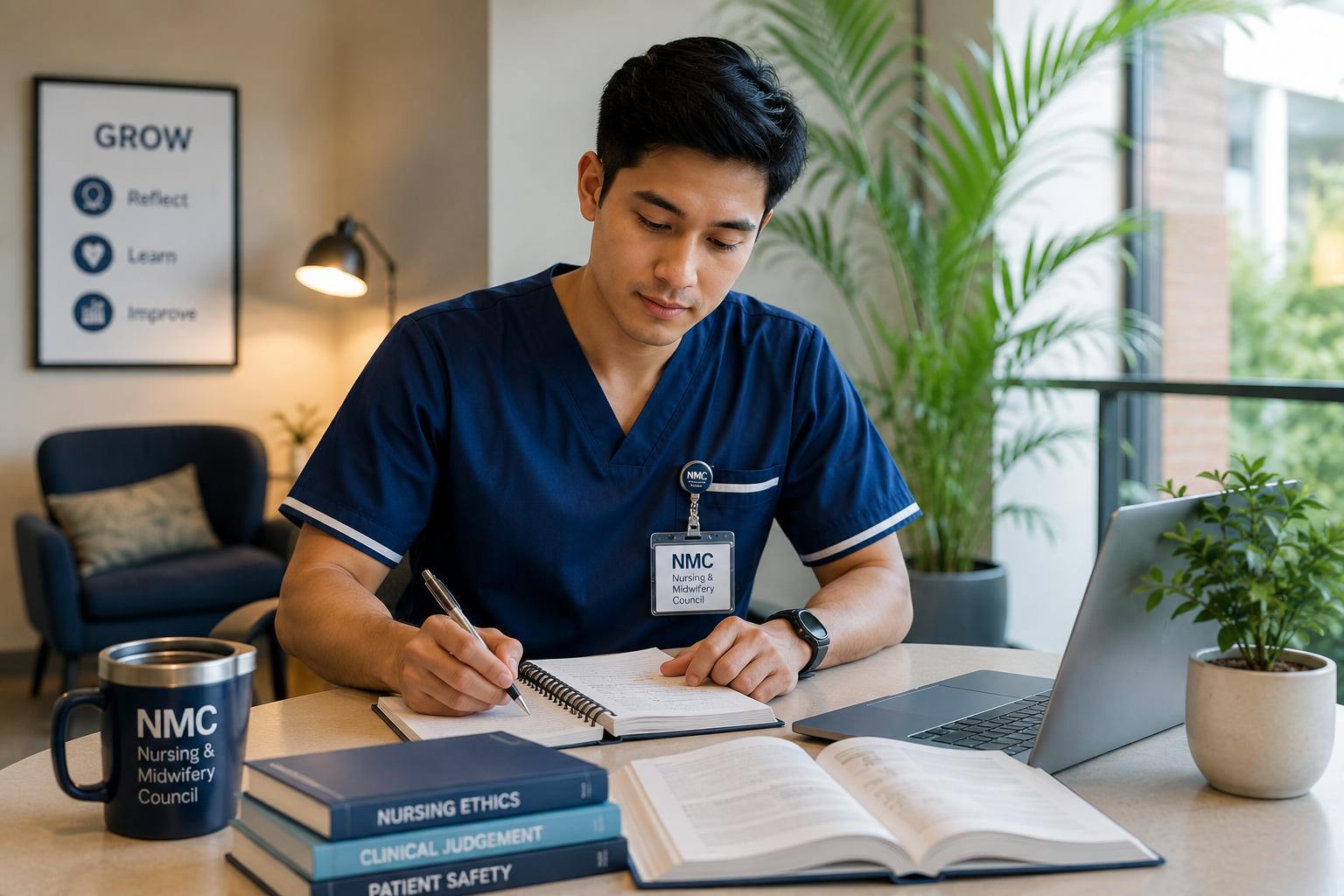
Reflective practice is the process of critically reviewing experiences to improve future decision-making and clinical performance.
It involves considering:
What happened?
Why did it happen?
What were the contributing factors?
What could have been done differently?
What learning has been gained?
How will future practice change?
Reflection is not about assigning blame. Instead, it promotes professional growth and continuous improvement.
Why Reflection Matters Following a Patient Safety Incident
Every patient safety incident presents an opportunity to improve healthcare delivery.
Reflection helps nurses:
Understand the circumstances surrounding the incident
Identify strengths and weaknesses in practice
Improve clinical judgment
Enhance communication skills
Develop safer working practices
Strengthen professional confidence
Reduce the likelihood of similar incidents occurring again
A culture of learning supports both individual professionals and healthcare organisations.
The NMC and Reflective Practice
Reflection forms part of the NMC's expectations for registered nurses.
During revalidation, nurses are required to complete reflective accounts based on their professional experiences and learning.
The NMC encourages reflection because it demonstrates:
Professional insight
Accountability
Commitment to learning
Continuous professional development
Safe and effective practice
Reflection should always be honest, constructive, and focused on improving patient care.
Learning Rather Than Blame
Modern healthcare increasingly promotes a learning culture rather than a culture of blame.
Many patient safety incidents result from multiple contributing factors, including:
Staffing pressures
Communication breakdowns
System failures
Environmental challenges
Human factors
Complex clinical presentations
Reflective practice encourages nurses to consider both individual actions and wider organisational influences.
Using Structured Reflection Models
Many nurses use recognised reflection frameworks to organise their thinking.
Popular models include:
Gibbs' Reflective Cycle
Driscoll's Model of Reflection
Johns' Model for Structured Reflection
These frameworks help healthcare professionals analyse events systematically and identify meaningful learning outcomes.
Reflection During Investigations
Where an incident leads to an employer investigation or NMC Fitness to Practise proceedings, reflective practice may form part of the evidence demonstrating professional insight.
Meaningful reflection often considers:
Acceptance of responsibility where appropriate
Recognition of areas for improvement
Learning undertaken
Changes implemented in practice
Commitment to ongoing development
Reflection should be genuine and based on personal learning rather than written solely for regulatory purposes.
The Role of Continuing Professional Development
Reflection frequently identifies opportunities for further education.
Examples include:
Medication safety training
Documentation workshops
Communication courses
Leadership development
Clinical updates
Simulation training
Safeguarding education
Linking reflection to CPD demonstrates an ongoing commitment to maintaining professional standards.
How Reflection Improves Patient Safety
Effective reflection benefits not only individual nurses but also future patients.
By learning from incidents, healthcare professionals can:
Improve clinical assessment
Strengthen decision-making
Enhance teamwork
Reduce communication errors
Improve documentation
Recognise deterioration earlier
Promote safer care environments
Continuous learning contributes directly to better patient outcomes.
Common Misconceptions About Reflection
Some nurses worry that reflective practice involves admitting fault.
In reality, reflection is about understanding experiences objectively and identifying opportunities to improve.
Reflection is not:
An admission of legal liability
A disciplinary sanction
A punishment
A replacement for factual investigations
Instead, it is a recognised professional development tool that supports learning and safer practice.
The Role of Nursing Expert Witnesses
In professional regulation and clinical negligence cases, nursing expert witnesses may review whether reflective practice demonstrates professional insight and learning.
Experts may consider:
Actions taken following an incident
Changes implemented in practice
Compliance with professional standards
Evidence of ongoing education
Overall clinical competence
Their independent opinions assist solicitors, employers, and regulatory panels in understanding the professional context of the case.
Conclusion
Reflective practice is a cornerstone of professional nursing and an essential component of delivering safe, effective, and compassionate care. Following a patient safety incident, taking time to reflect allows nurses to understand what happened, identify areas for improvement, and strengthen future clinical practice.
Rather than focusing on blame, reflection supports learning, resilience, and continuous professional development. When combined with education, supervision, and evidence-based practice, reflective learning contributes to improved patient outcomes and reinforces public confidence in the nursing profession.
For healthcare professionals involved in investigations or regulatory proceedings, meaningful reflection also demonstrates professionalism, accountability, and a genuine commitment to maintaining the high standards expected throughout a nursing career.
FAQs
What is an expert nurse witness?
An expert nurse witness is a qualified nursing professional who provides independent, impartial opinions in legal cases. Their role is to review clinical records, assess whether accepted standards of nursing care were met, and prepare expert reports for courts, solicitors, insurers, and tribunals.
What does a nursing expert witness do?
A nursing expert witness provides independent opinion on nursing care, standards, practice and professional issues relevant to legal proceedings.
Are you a referral agency or middleman?
No. We are not a referral agency or middleman. Instructions are handled directly by nursing experts within Expert Nurse Witness Group.
Are your experts registered with the Nursing and Midwifery Council?
Yes. All nursing experts within the group are registered with the Nursing and Midwifery Council and work within their professional scope of practice.
Can we request an expert CV?
Yes. We do not publish individual expert profiles as standard, but a relevant expert CV can be provided on request once the instruction has been reviewed and suitability has been confirmed.
Why do you not publish individual expert profiles?
We recognize that our nursing experts have a right to professional privacy and personal data protection. We therefore do not publish individual profiles as standard. This is in line with data protection principles, including only sharing relevant information where there is a clear professional purpose. A relevant CV can be provided on request once suitability has been confirmed.
Do your experts understand their duty to the court?
Yes. Our experts understand that their overriding duty is to the court and that this duty is independent of the party instructing them.
Can you provide mental capacity and best interests reports?
Yes. We can provide nursing expert opinion on mental capacity and best interests matters where the issues fall within nursing expertise.
What is a quantum care report?
A quantum care report evaluates a person's current and future care requirements following injury or illness. It helps quantify care needs for legal proceedings.
Can you provide quantum care reports?
Yes. We can provide quantum care reports, care cost opinions and future care needs reports where the issues fall within nursing expertise and are supported by the evidence.
Do you cover the whole of the UK?
Yes. We provide UK-wide nursing expert witness services, with remote consultations and assessments available where appropriate.
How long does it take to prepare an expert report?
Timeframes vary depending on the complexity of the case and the volume of records. We will provide an estimated turnaround time once instructions have been reviewed.
What happens after I submit an enquiry?
Once we receive your enquiry, we will review the information provided, discuss your requirements if needed, and advise on availability, scope of work, and the next steps.